

Hello, my friend.
Another year has gone by. I am one step closer to middle age. In the warmth of the winter sun, I want to look back on a few things from the past year that feel worth talking about.
The fading boundary of age
Over the past year, I have felt a shift in myself more and more clearly. The boundary of age, at least the one I used to feel so strongly, has been quietly fading.
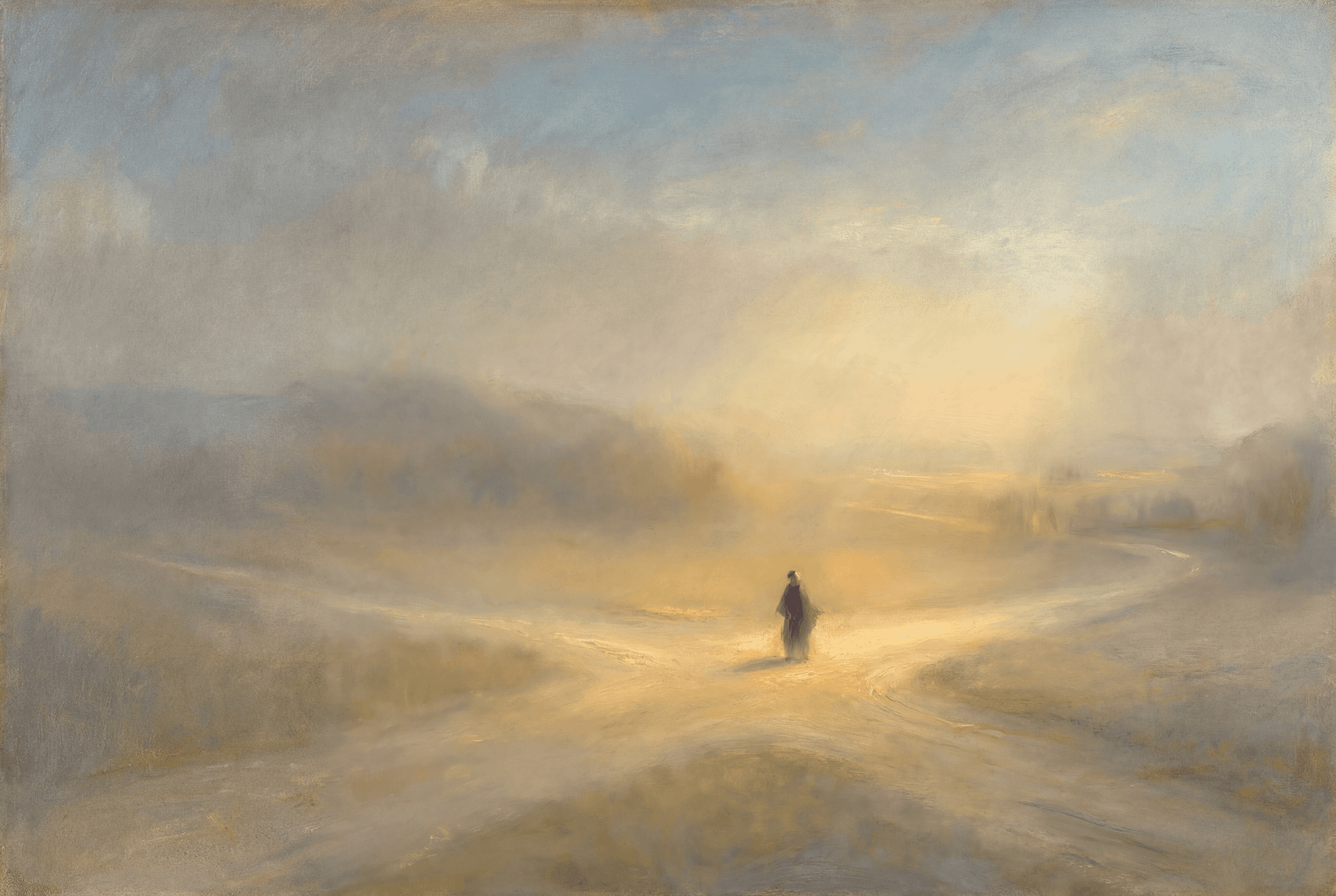
It is true that I am living in a place where people do not care much about age. But this change is not simply because the environment changed. It happened as I got older and started putting my attention into a small number of things I genuinely want to do. Once you do that, many of the things you used to measure by time and age begin to matter less.
The environment helps, too. When the people around you do not judge whether you should do something based on your age, and they do not assume you must live a certain way by a certain stage, it becomes easier to stay in a fairer and freer state of mind. You can bring your focus back to the work itself.
But the more interesting part is this. In a place that does not talk about age much, I slowly realized that the person most obsessed with age was often me. Before making decisions, I would pull out my age and weigh it like evidence, almost as if I needed it to justify myself. Anxiety became “Am I too late?” Hesitation became “Is this the age to stop messing around?” Not starting became “Did I miss the best time to learn this?”
Because of that, I began to move my attention away from age. I started to look more seriously at something else. Do I actually like this?
This year made one thing clearer to me. What truly shapes your work and career has never been age. It is love. It is what you care enough about to keep showing up for. Age is background information. Love decides whether you are willing to pour time into something, repeat it, and keep moving forward even when no one is watching.
When you genuinely like something, you naturally learn new tools, fill in new skills, and step into new domains. You are also more willing to go through a period of being clumsy and not looking great, because you know it does not mean “I can’t.” It simply means “I’m still on the way.” That urge to get better turns the noise of age way down.
So what I care about now is not “What am I still doing at this age?” It is “Do I still have the capacity to love something enough to stay with it?” As long as that love is still there, many boundaries loosen on their own. The boundary of learning loosens. The boundary of switching paths loosens. The boundary of starting loosens. Age does not disappear. It becomes context, not a button that decides your fate.
AI tools, three years in
In the third year of AI tools becoming mainstream, I find myself looking back and asking a simple question. What did AI actually change?
Most people would say efficiency. And they are not wrong. AI has freed us from a lot of repetitive, tedious work that used to demand hours of brute effort. Writing copy, generating an image, drafting a plan, even building a rough product prototype, all of it is dramatically faster than it used to be. The range of information you can access is wider, too. The productivity gains are real.
But to me, AI never only changed efficiency. The bigger shift is in how we work and the mindset we bring into the work.
In the past, I spent a huge amount of energy on one thing. How do I make it happen. Making something real used to be hard. You got stuck on implementation, tools, and details. Now making something exists in a very different way. It is often the easy part. So my attention has moved forward. What problem am I actually solving. Why am I doing this. What change will it create once it is built.
That is why I have started to notice something. As AI tools become more common, people care more and more about the process, while the output becomes something that happens almost naturally. Output can be copied quickly. A result can be replicated in minutes. But the path from idea to output is not so easily reproduced. Everyone carries their own judgment through that path. The hesitation, the self doubt, the moments you overturn your own thinking, and the work of turning something vague into a clear conclusion, that part is personal.
And that is exactly what made me anxious this year.
In the past, my anxiety was about not being able to make it. Now the anxiety is about being able to make too much. You can generate a version at any time. You can produce an image, a paragraph of copy, a plan, or a functional prototype whenever you want. When you have more options, your attention gets diluted more easily. Sometimes I catch myself wondering whether I truly want to do this, or whether I am doing it simply because it has become so easy.
That is when I realized something else. It is not a bad thing that AI makes expression cheap. The problem is that we start treating expression as the finish line. Many times, once a result exists, we act as if the work is done. But if the expression has no standpoint, no trade offs, and no judgment of its own, then it is only something that looks like content. It may be correct. It may be complete. It may even read smoother than what we would write ourselves. But it is not necessarily you.
So lately I have been fixated on one step. Defining what done means.

What I mean is not reviewing the output. Sometimes the pile of things you can produce quickly is not even worth looking at. What I mean is starting from the end. I pause to make sure I am headed in the right direction. Sometimes I bring that question to the very beginning. If it is going to be easy to build, then what is the soul of it.
Sometimes I intentionally do something that goes against efficiency. Before AI does anything, I ask myself a few questions.
- If I had no AI, how would I do this.
- Am I trying to satisfy myself, or am I trying to serve the user.
- If I had to give something up in the end, what would I give up.
Once these questions are clear, many things start to move on their own. Because then AI is a tool, not a direction. It accelerates execution and expands possibilities. I take responsibility for the harder part. I define the problem, I make the trade offs, and I define what done means.
And when I see these questions clearly, things often become naturally easier. From my perspective, efficiency gains are inevitable. But the biggest change AI brings to us might be this shift in how we think, and how we work. In the end, what we accumulate is not a pile of outputs. It is process assets. When we keep defining, keep questioning, and keep returning to our own judgment, the answers we arrive at are far more likely to match what we truly want.
Life inside a startup
A year and a half into this startup, I want to share some of the small things I have seen and learned, and some thoughts I have been carrying with me.
You think you are embracing AI, but you are reinforcing the old order
As an AI tools company, our most basic requirement is not whether we should use AI. It is whether we can treat AI as a real part of the team in day to day work. It needs to be able to step into the smallest, most ordinary tasks across product, engineering, operations, and design.
We have been doing that. Engineers have started using Claude Code and Codex to ship iterations. Sometimes it even drifts into a kind of semi unsupervised mode, and we only take a careful look when we do the final review. Ops is using AI for video marketing. Design is using AI inside Figma to offload repetitive work.
I think this is a good sign. If we do not touch it and study it ourselves, it is hard to build a better experience for users in YouMind.
But I still want to say this. In many cases, our actions are not thorough enough.
What we often do is squeeze AI into the old workflow, instead of letting AI force us to change how we work. AI can make an old workflow run faster, but it will not make that workflow more correct.
In the AI era, in a sense, we are all becoming amplified individuals. Our identities are shifting. The moats around traditional disciplines are no longer absolute. With AI, almost anyone can cross boundaries more easily. Product people can touch code. Designers can touch data. Ops can use automation to solve problems that used to be out of reach.
Skill boundaries are getting softer, but organizational boundaries often get harder.
That is where the real problem is. Even when we try to change, the organization and our thinking tend to snap back to the old frame. Job boundaries. Permission boundaries. Process boundaries. These boundaries used to exist for efficiency and safety. In the AI era, they can quietly turn into invisible walls.
Take me as an example. To this day, I still do not have access to our code repository.
It is not because I want to write code to prove anything. It is because when AI lowers the barrier to code, role based bias still acts like the walls of the old world. It keeps reminding you not to cross the line. So for many things that could be solved with one small step, we would rather take the long way around and return to the original division of labor, then wait our turn.
So yes, taking action is good. But if our mindset is still stuck in the old order, still protecting boundaries that no longer fit, then AI is only helping us execute the old world faster. It is not helping us step into the new one.
Choose your most honest self
Over the past year, I became clear about one thing. In a time when bubbles are everywhere, we should choose the most honest version of ourselves.
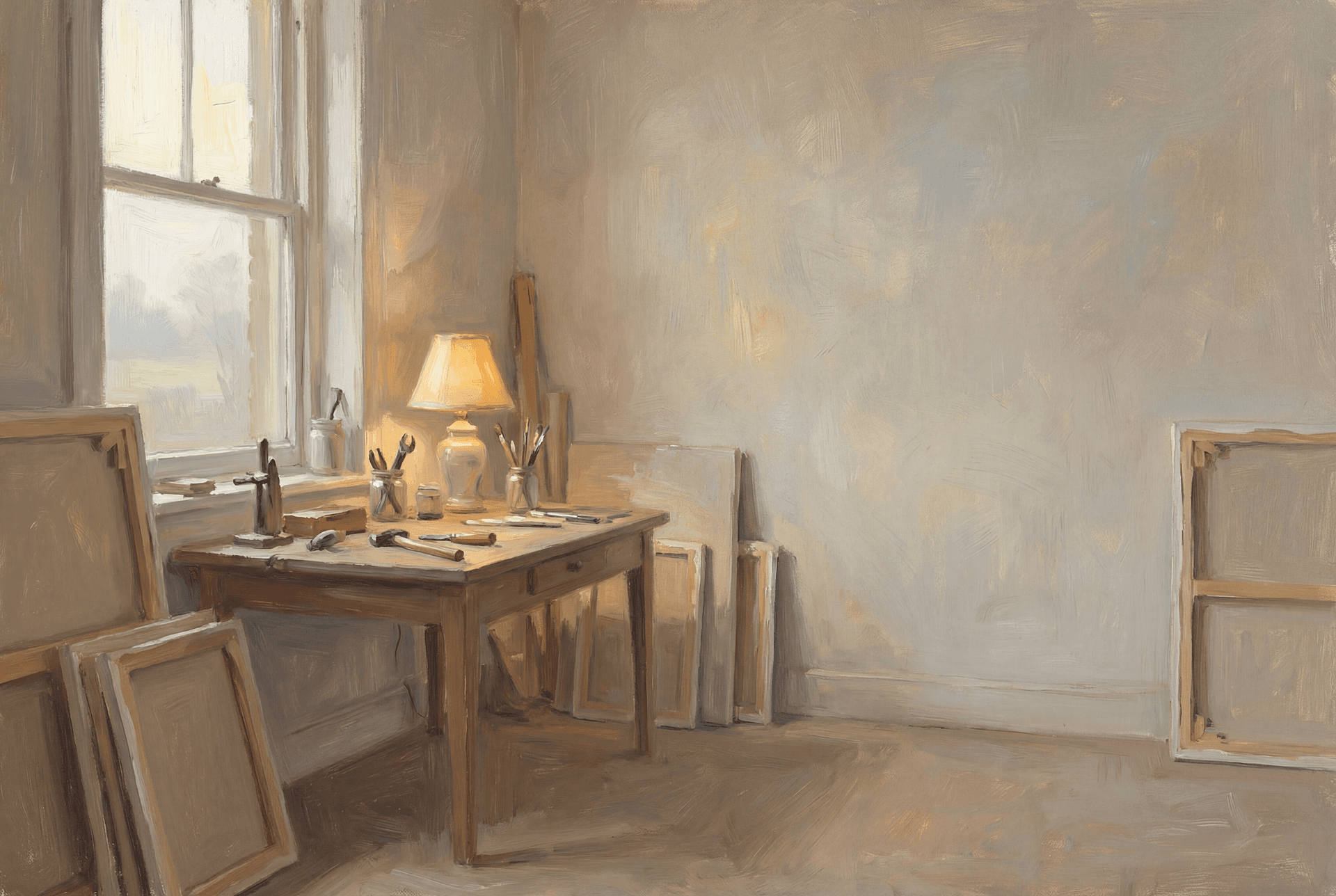
For a small team, there is sometimes a huge temptation. Many things are not built. They are narrated. In this world, you can always hear a better story, a bigger vision, faster growth. Bubbles are light. You can stack them quickly. But after you tell the story too many times, one day you start to lose the edge of reality. It is only when you fall and look back that you realize how often those bubbles pulled you away from users and away from real value.
I do not want to take that path.
My thinking is simple. We are a group of plain people. We are not great at marketing through stories. We are more used to keeping our feet on the ground. We explain the value of the tool clearly, then we build it piece by piece. Sometimes we keep iterating on a tiny feature for a long time. That goes against the current mood of rapid expansion. But I keep coming back to this. I do not want to answer whether a feature is right, or whether users are creating value here, with stories. I want to answer it through real usage and real workflows, until the answer becomes obvious.
That is why we added one basic rule for the whole team this past year. We do not exaggerate.
If the numbers are bad, they are bad. If we have not found product market fit, then we have not found it. We would rather see the problem clearly than hypnotize ourselves with our own narrative. You can tell stories, but you cannot perform the data. Once you start performing, you no longer know where you are wrong. You also do not know what the right next step is. Many times you get carried along by the current, and in the end you turn into a product that looks like everyone else.
So I have started to believe something more and more. Being real is not a pose. It is how we try to find something solid to stand on in this world. It is also a cost structure. We are willing to give up the bubbles that look nice in exchange for longer patience and more grounded iteration. Many times, being real is not cold water. It is a light.
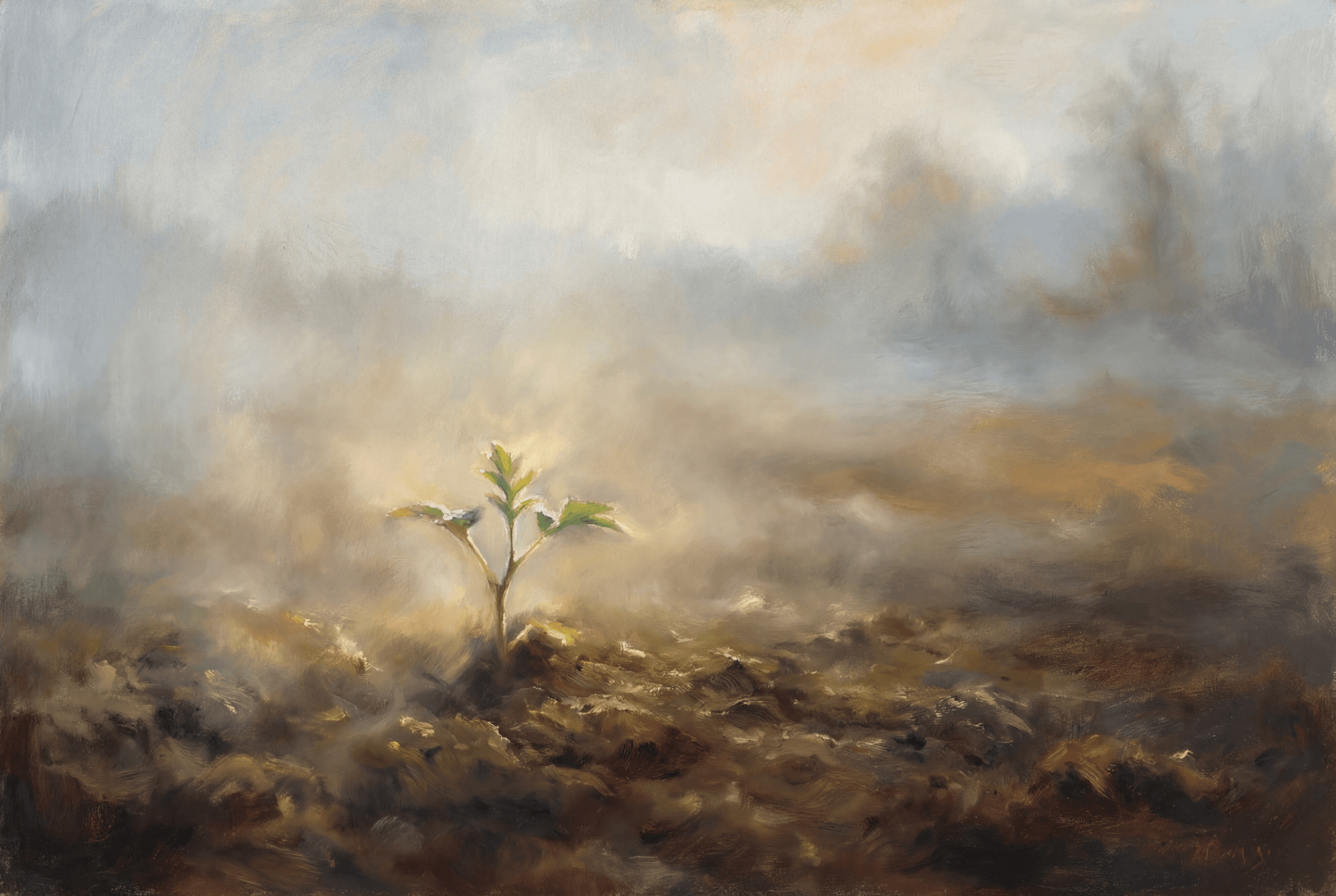
It makes you braver to face yourself, and braver to face the market. And when you finally make it through, you will not feel hollow from having performed for too long.
The cost ledger
We once built a small feature that refunded credits when a user downvoted an answer.
The idea was simple. AI answers cannot be perfect every time. Users spend credits for an answer. If the answer is truly bad, that frustration is real. From a system perspective, we wanted a safety net. We let users downvote to get the spent credits back, and it also gave us a signal to improve the model and the product.
The ideal was beautiful. But after launch, we quickly saw another behavior in the logs. Some people downvoted almost every answer and turned it into a zero cost mode. It was not a single person’s fault. It was more like a mechanism being pushed to an extreme. When a button can reduce cost to zero, it easily shifts from being a safety net to being the default path.
That was the moment I truly realized something. A safety net is not just an attitude. It is a ledger.
Compute, models, and the time our support team spends are all real costs. We can pay for fairness, but we cannot pay without limits. Once a safety net has no boundary, it drags the whole system into an unhealthy state. When people get used to trying with no cost, the team ends up paying for endless rounds of correction. In the end, the experience, the cost, and trust all get worn down.
So what we are really doing is turning the safety net from a single button into something sustainable. It is not about closing the door. It is about giving the door a handle, so people who are genuinely hurt by a bad answer have a way out, and the system does not become an ATM. That is how a safety net can last, and how trust can last.
In the end, this is part of entrepreneurship too. Running a small company is not hardest when you need to get one decision right. The hardest part is staying healthy over the long run. Every product decision, and every design that looks more generous to users, comes with its own cost curve. The real skill is not making something good. It is making something good in a way that can keep going.
A state of mind that stays open
This is our second year after making a major decision as a family. Last year my wife and I arrived in a country that was completely new to us, backpacks on our shoulders and a suitcase in hand. More than a year has passed since then.
A lot has changed in our life. Our understanding of the world has been refreshed again and again. But when I look inward, the biggest change might not be the external conditions. It might be the way we look at everything. Little by little, our mind has become more open.
Anxiety is everywhere in life. Over the past year, we have actually become more at ease with it. If I am honest, from birth to death, many choices are simply out of our hands. Some problems cannot be solved by effort alone. Some questions do not have a certain answer no matter how hard you think. If that is true, then instead of being torn apart by the situation, it makes more sense to put our energy into something we can control. We can adjust how we meet all of this. We can try to keep our mind open when things happen.
This openness is not the same as forcing yourself to “think positive.” It feels more like a division of labor we slowly found this year. Many things cannot be decided right now. The future is uncertain. So do not treat what you cannot control as today’s task. Do not run every possible ending in your head ahead of time. Bring your attention back. Do what you can do in front of you. Take the next small step and make it steady.
Once we entered that state, we could feel it clearly. We were almost renewing ourselves every day. The challenges that show up everywhere in life were no longer just sources of pressure. They started to feel more like bright interruptions, small surprises woven into the day. Many situations we never had to face before became part of our new normal. They became things we had to think about, feel, and relearn. For me, learning how to make dumplings and cured meat slowly turned into real skills. The change in my wife was even more obvious. Data analysis, programming, and AI started to become part of her daily life. If you took us back one year, we would not even have imagined it.
Even more specific things kept changing us. They made us value the present more. For example, going for a run on a morning that is below freezing. Talking about work and life with people from completely different cultures. The unknowns that used to make you tense slowly became raw material for life. They became things we could experience, adapt to, and digest.
Under all of this, we had a third change. We learned to stop forcing ourselves to power through everything. If we want to watch TV, we watch TV. If we need rest, we rest. We stop confusing discipline with pushing ourselves until we break. We used to think that being serious meant staying tense all the time. This year we became more certain that real seriousness means taking care of yourself well enough to keep going for the long run. Life, work, and your mental state need balance. Listening to your inner voice is not indulgence. It is a clearer way to set your pace, so that love and curiosity can stay with you.
Of course, this does not mean we never feel afraid. When it comes to uncertainty, we still get lost sometimes. We still feel anxious. Sometimes we still get frustrated with the present. But after this series of choices, both my mind and my body have gradually accepted this new way of living. We have also built a new kind of adaptability.
We have started to believe that an open mind is not the absence of anxiety. It is allowing anxiety to exist without letting it make decisions for us. Failure, success, setbacks, smooth days, all of it is the most real shape of life. It is also proof that we exist as independent thinkers on this journey.
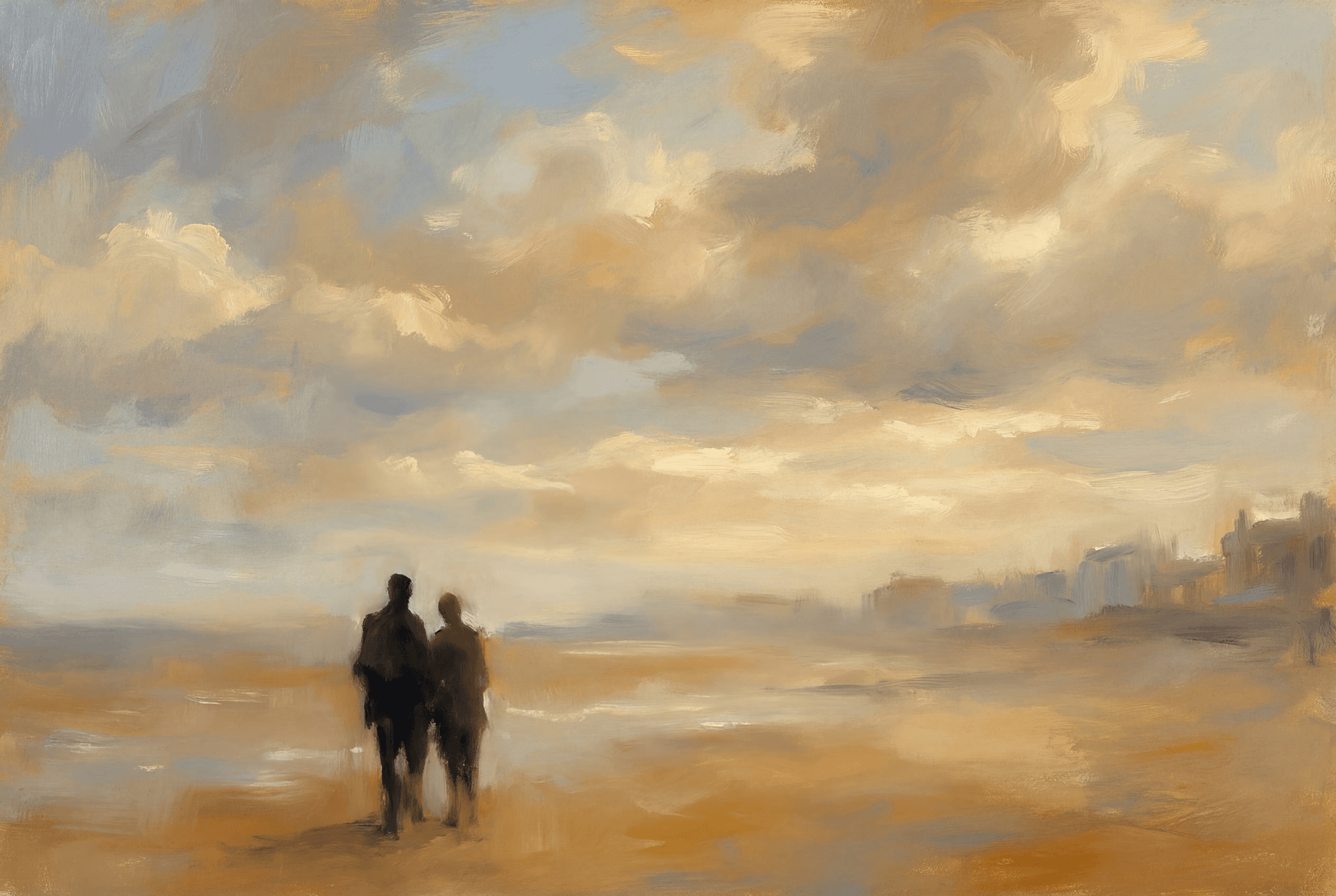
What matters most is remembering this. We are not alive for endless anxiety. We are alive to face the unknown with courage, and to feel uncertainty while we are still here.
So peace of mind is not about making life more stable. It is about living more truthfully.