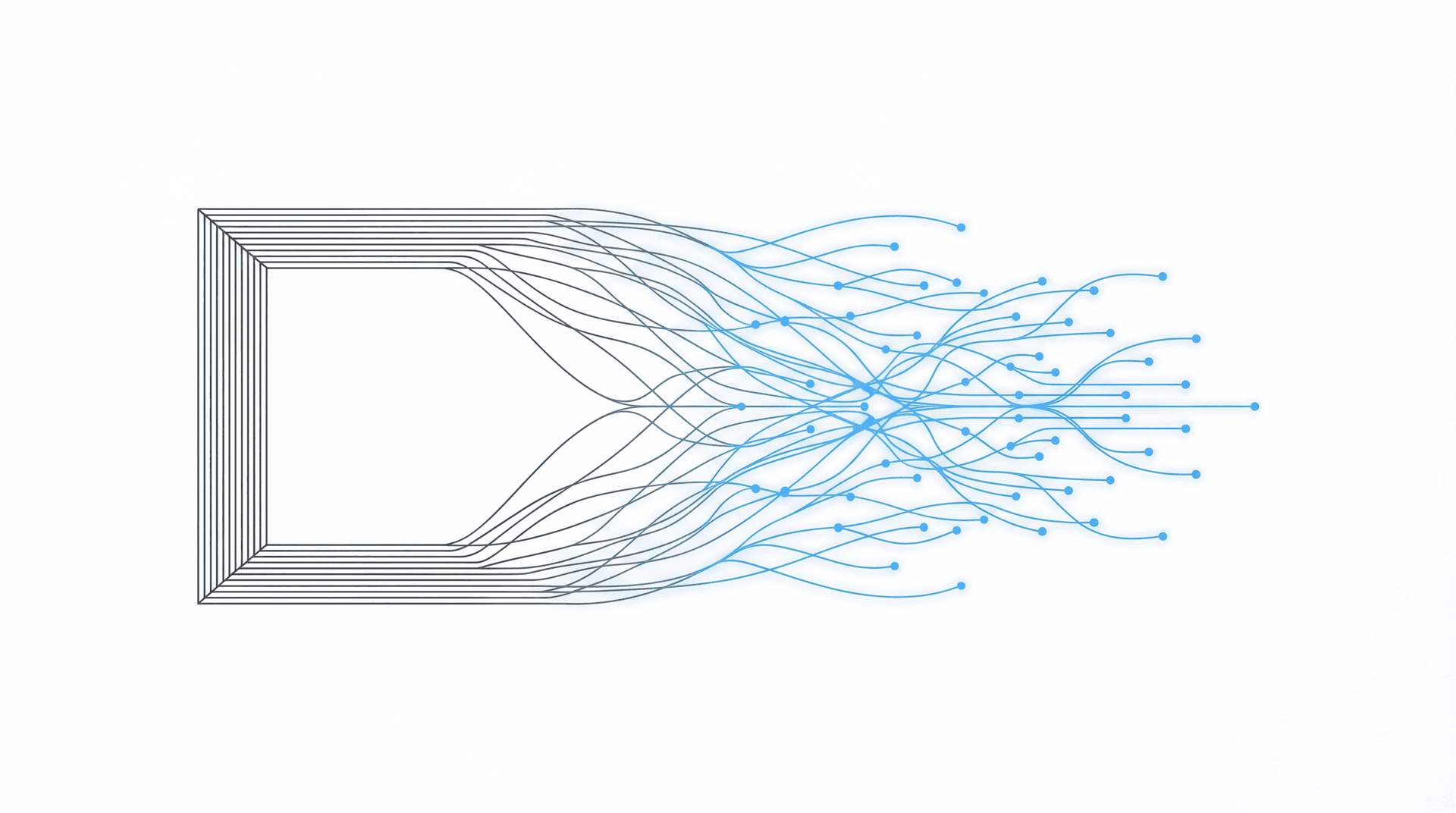

When's the last time you opened Figma?
Over the past six months, I've moved a significant portion of my design work to AI coding. When I zoom out from my own workflow and look at the industry as a whole, I see something worth discussing: our profession is undergoing a fundamental restructuring, and most people haven't realized it yet.
A Concrete Example
Recently, while building a trash feature for YouMind, I had a moment of clarity.
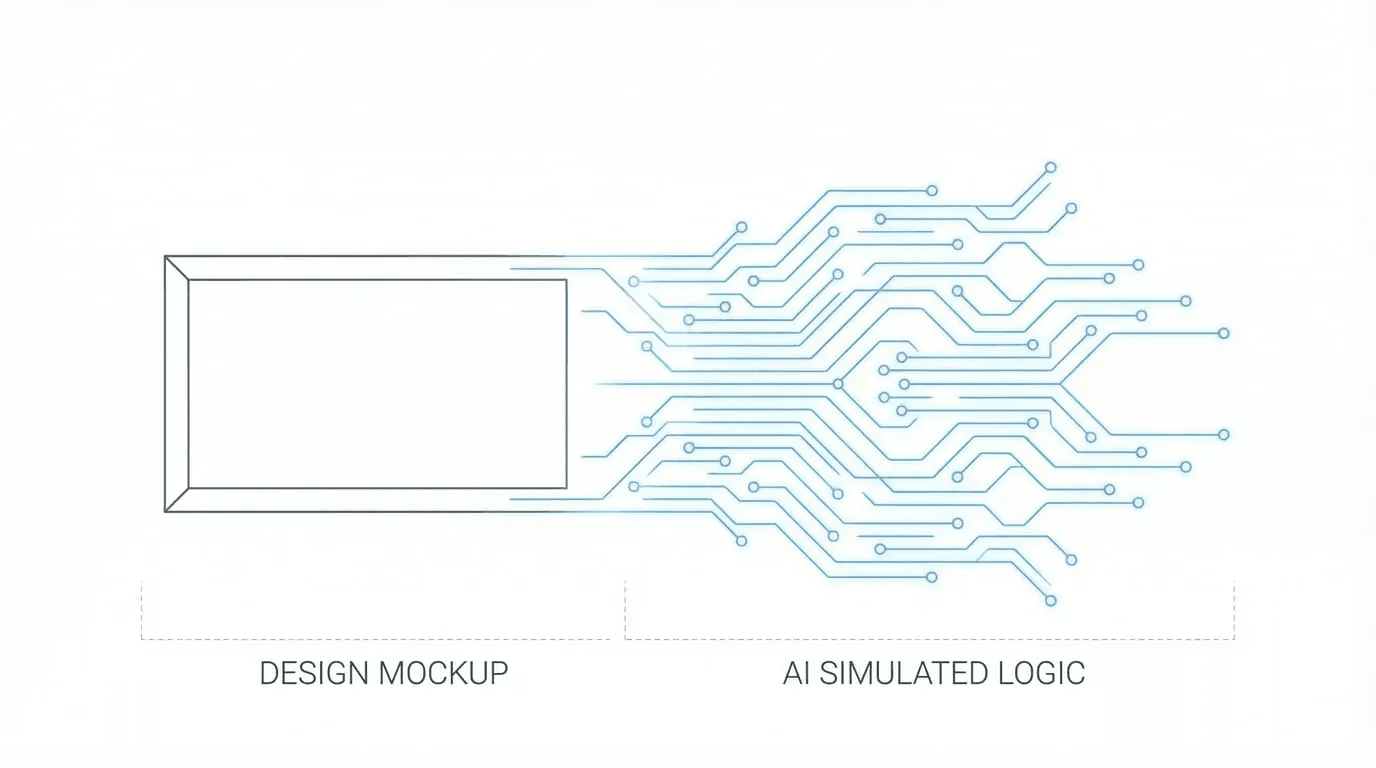
Traditionally, building this kind of feature really tests a designer's experience. The trash function seems simple on the surface, but the logic underneath is incredibly complex. In the past, we'd pile up mockups in our design tools, trying to visualize every possible scenario to ensure logical completeness. That's where experience showed junior designers working on something like this would constantly miss edge cases.
You'd think you'd covered scenarios A, B, and C, then sit down with engineering and realize there are also scenarios D and E.
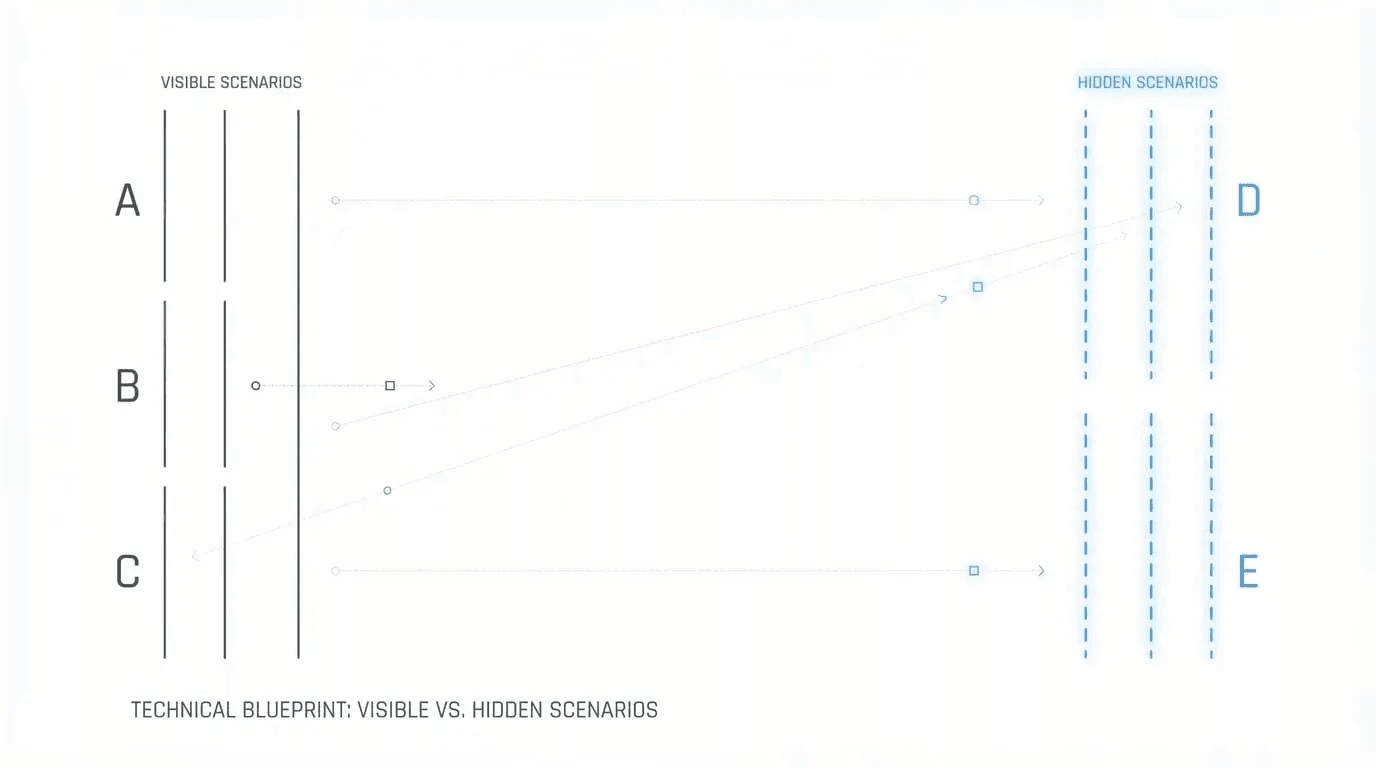
Now it's different. I just open Claude, describe the feature, and have AI simulate all the logical possibilities. It can reference the existing designs and generate a basic prototype to test with.
Questions like "What happens after deletion? How do we restore? What about bulk deletion and restoration?" complex flows that used to require multiple rounds of back and forth can now be validated in a few hours with AI.
The shift is subtle. On the surface, it looks like a tool change, but what's really changed is the medium of thought.
Designers used to think in "interfaces" , put a button here, add a modal there. Now we need to start thinking in "systems" when this button is clicked, what changes in state? Where does the data flow? What are the edge cases?
Just like painters think in color and writers think in words. Change the medium, and the dimensions of thought change too.
The Shift I'm Seeing
Behind this example is a split happening across the entire industry.
One group of designers still follows the traditional workflow: open Figma, sketch ideas, create high fidelity mockups, spec out interactions, hand off to engineering, and wait for implementation. This process takes anywhere from a few days to several weeks or even months. Nothing wrong with that, it's doing things right.
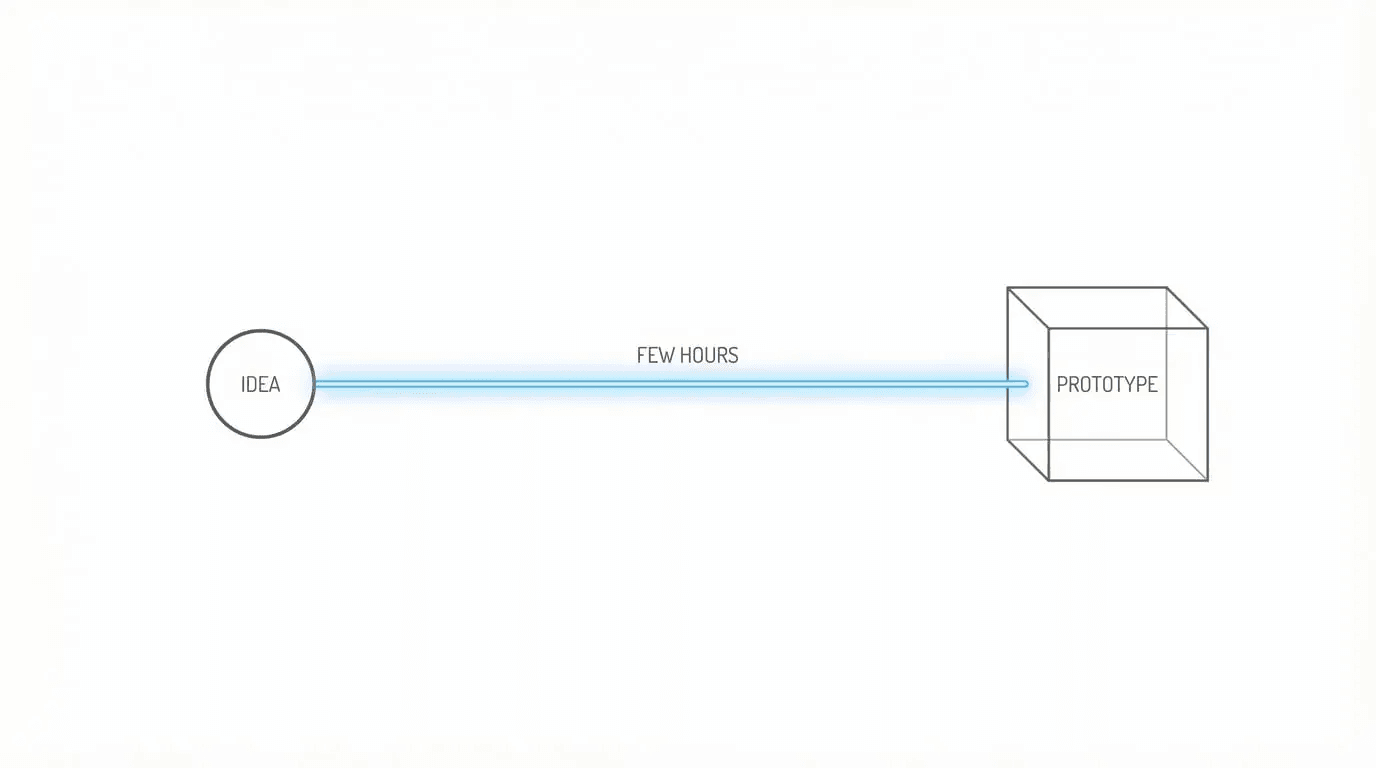
Another group, myself included, has started using AI coding to build prototypes. From idea to interactive validation in hours. Working with something that actually runs, testing and iterating, rather than imagining in our heads or pushing pixels on a canvas.
From Idea to Prototype: Distance Collapsed
The traditional design workflow is linear. You get requirements, go from idea to sketch to high fidelity visuals, hand off to engineering for implementation, then test before launch. Start to finish: days at best, weeks or even months more commonly.
With AI coding, the process becomes: idea, then straight to prototyping with tools like Claude Code or Cursor. Test the prototype immediately and validate. The cycle collapses to hours.
What you'll find is that instead of spending days in design files agonizing over interaction details, you can now have AI generate several different interaction approaches. You don't have to imagine the next step, you can actually experience which interaction works best for your product.
For me, the evidence is clear: my Figma usage has dropped while I'm constantly hitting my Claude Code limits. This isn't to say Figma is bad, it's just that I've gotten used to building being faster and feeling more tangible than designing.
I suspect that in the near future, Figma will gradually lose users like me. As the technology advances, manual mockup creation may become less necessary.
From Interface Thinking to Systems Thinking
Another significant shift is the move from flat to dimensional thinking. Before, you'd think: "Should I put a button here? Add a popup there?" At most, you'd check with stakeholders about copy.
When you start implementing through AI, you begin asking different questions: "After the user clicks this button, what's the state? If there's data, how should it display? What happens if the click fails?"
You'll gradually realize you're now focused on state, logic, edge cases, and data flow. Take YouMind's trash feature, traditional design thinking only cares about "can I click it, can I delete it?" With the new mindset, you expand to: "What types of data should go in? What's the restoration flow once it's there?"
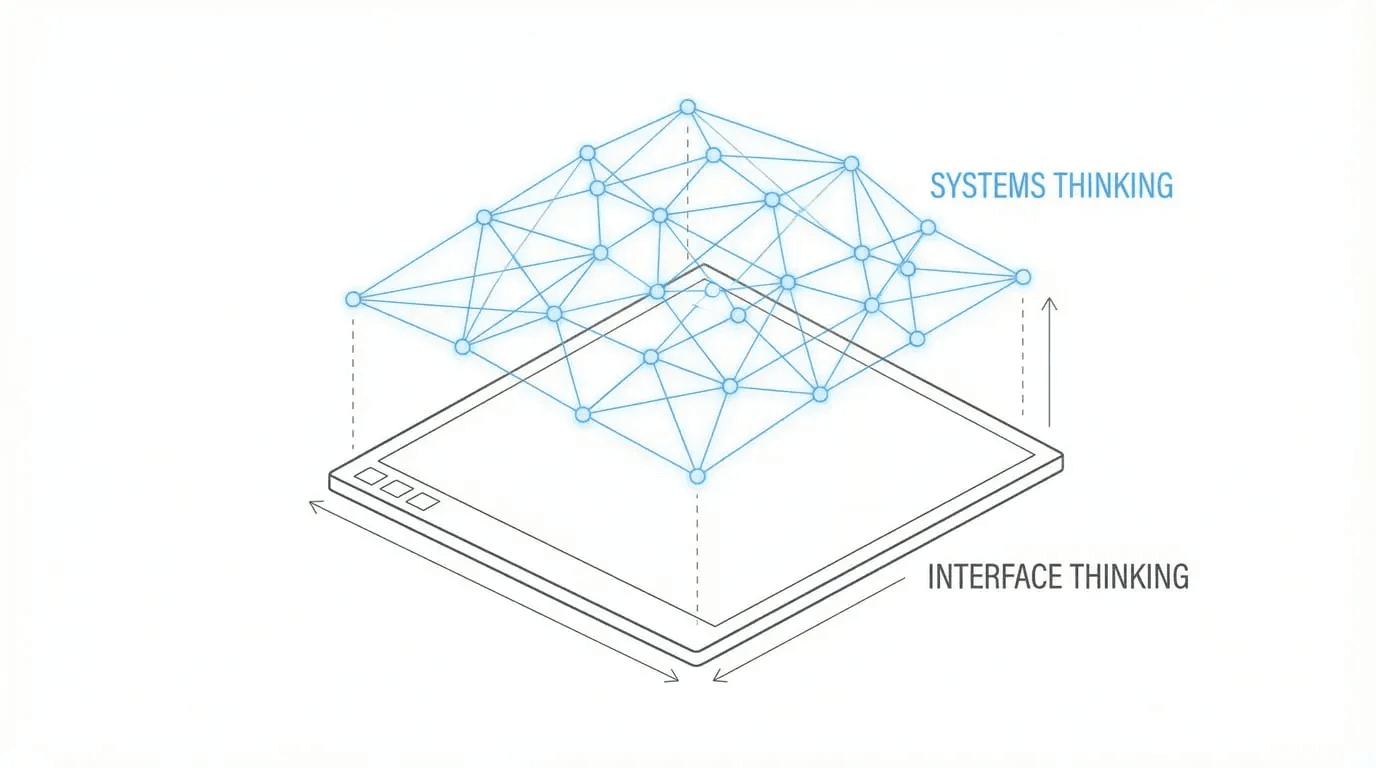
Many designers have long stayed at the interface level, with relatively narrow focus and limited technical depth. With these new skills, more designers will naturally start thinking in systems. When discussing with engineers, the conversation shifts from "Can this be done?" to "Maybe this approach would work better."
What This Change Means
Looking at the essence behind the shift, what does this really mean? I see it from three angles:
Redistribution of Power
In the production pipeline, engineering used to hold clear decision-making power because they controlled the final act of creation. Transforming idea into product had to go through their hands.
As technical capabilities become democratized, designers no longer need to "convince" others to implement their ideas. It's not about who has the technical skills having creative power, it's a return to fundamentals: the thinking and judgment behind your ideas determine creative power.
The same applies to engineers. If they simply continue collaborating with the old mindset, they'll likely be replaced, it's just a matter of time. Engineers face the same challenge we do: step outside your domain, return to creativity, return to judging "which path to take next."
Technical skill is no longer the scarce resource. Judgment is.
A New Medium for Thought
From the moment we understand our profession, we lock in our medium of thought. Painters think in color, writers think in words, and we product designers have thought in interfaces and design mockups.
But "drawing" has limitations. Show someone a picture, and everyone might see something different, because images struggle to convey deeper information.
When you use AI coding to express yourself, you start using "executable form" as your thinking medium. Your imaginative space expands completely, you can now add state to visuals, incorporate behavioral logic, include data flow.
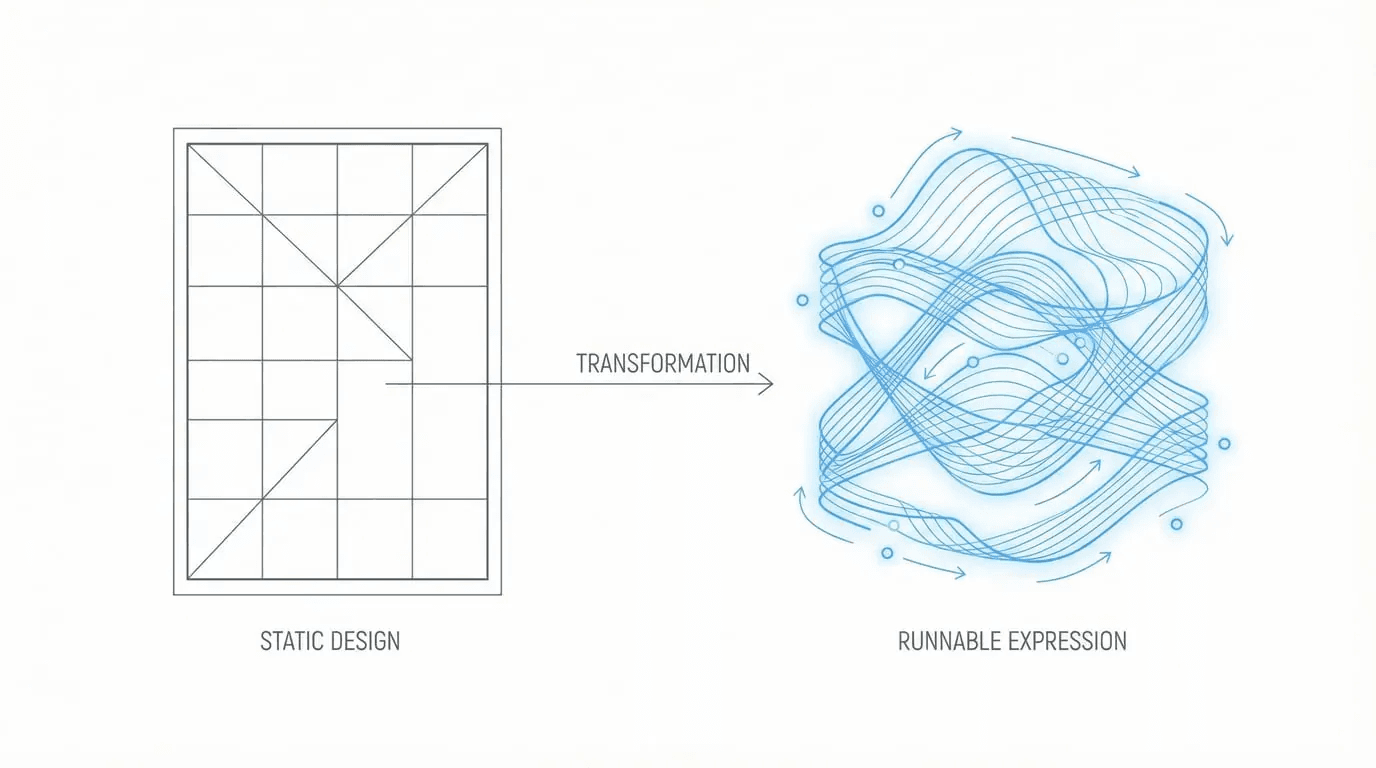
This isn't just gaining a skill, it's gaining an entirely new way of thinking about the world. And because this medium delivers a more dimensional, satisfying experience, it gradually becomes your primary tool. Code slowly becomes your medium of thought, not just an implementation tool.
A Shift in Identity
Designers used to work on parts of products. In my interviewing experience, I've met many designers who spent 1-2 years maintaining a tiny feature subset, like forms for an admin platform. Not that these features aren't important, but this approach limits a designer's potential and their genuine engagement with the world.
With AI coding, you can independently complete an entire product. This pushes you to think about what you're facing when you're not just building a feature, but building an entire product vision:
- What problem does this product solve?
- How does it solve it?
- What are the underlying values?
When you start thinking about these foundational questions instead of individual features, you slowly shift from product contributor to product author.
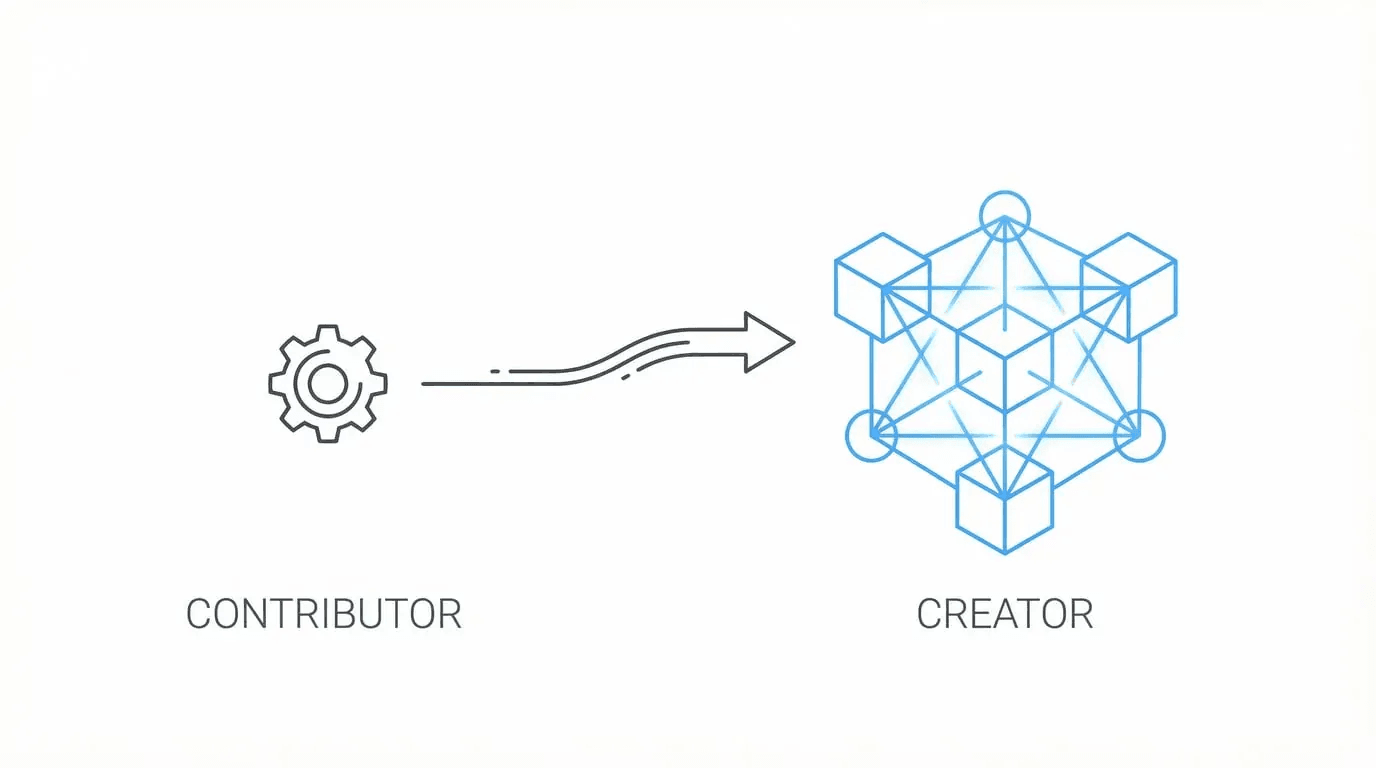
It's like you used to be the guitarist in a band, and now you're writing songs, arranging, recording, and even distributing, all on your own.
This changes the completeness of creation, expanding from a point to a plane, making people in our profession multidimensional.
Final Thoughts
The biggest change AI coding brings is that we, as product designers, can move from being one cog in professional specialization to experiencing what it means to be a "complete creator." It's not just about skill improvement, it's about a shift in thinking and identity. This is perhaps the biggest redistribution of creative power in our industry since the birth of the internet.
Of course, the implications extend beyond product designers to every role in our field. A year before large language models appeared, people worried about being replaced.
My answer remains the same: yes, our current jobs will definitely be replaced. But those who embrace new thinking and new approaches in this new era will likely emerge stronger, existing in this world in an entirely new form.