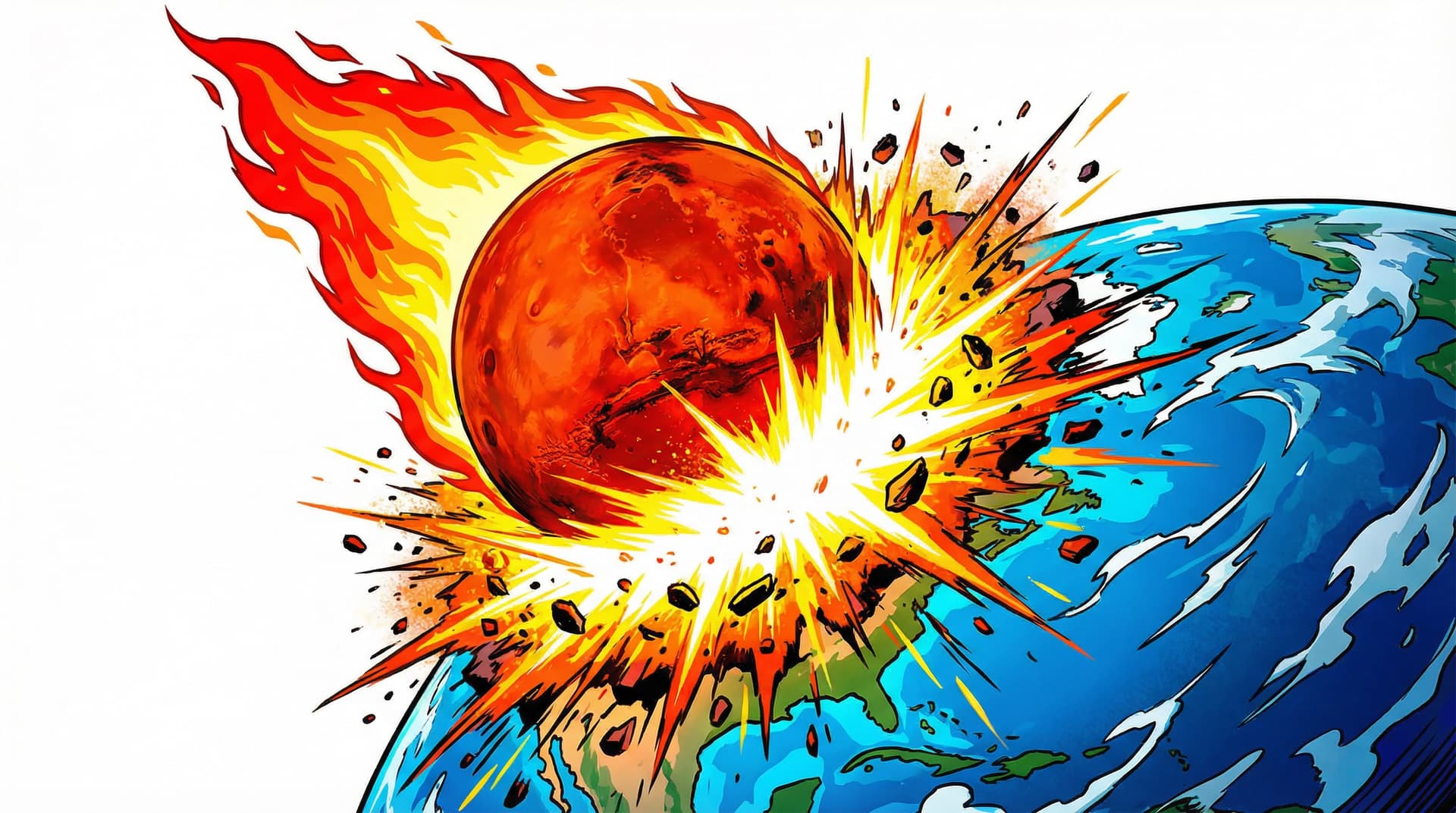

With products like OpenClaw still riding a wave of hype, I've been chatting with a bunch of founders in North America lately, and I've noticed something. People are genuinely pessimistic about the future of SaaS. Not the usual "market's rough" kind of grumbling. It's something deeper. There's this creeping sense that the fundamental logic SaaS has relied on for the past decade might be falling apart at the seams.
From the data, it is hard to deny this point. Since the beginning of 2026, the IGV ETF (which tracks major U.S. software stocks) has fallen by about 23%. In the first week of February alone, the entire software industry's market value evaporated by nearly $1 trillion. Forrester even described the severity of the situation as the "SaaS apocalypse.”
We're building a SaaS product ourselves, so this hits close to home. We're both players and witnesses. That's why I wanted to write down some of my thoughts.
SaaS Won't Die Overnight, But That's Not the Good News You Think It Is
Let me start with an unsexy take: traditional SaaS isn't going to vanish anytime soon.
The reasoning is pretty straightforward. I've watched a lot of traditional companies, including plenty outside of tech, start dipping their toes into AI. It's a lot like how they first adopted SaaS years ago. But going from buying an off-the-shelf SaaS product to having AI handle everything? The gap between those two isn't a technology problem. It's a management and mindset problem.
Let's be real. Most executives are used to the rhythm of "buy a system, train the team, roll it out." Getting them to believe "you don't need a system anymore, AI just does it for you." That's not something a product demo can fix. Mindset, habits, judgment. Those three things are the real blockers. Organizational inertia is massive, and it doesn't just disappear because AI got smarter.
On top of that, domain expertise still matters. Healthcare, supply chain, finance. The SaaS products behind these industries are built on years of regulatory compliance and specialized know-how. You can't just run a language model a few times and call it a day.
But here's the scariest part: a lot of people genuinely don't believe this shift is real. They're comfortable with what's working. Think about it: if you're already a top-ten player in your vertical and you've been thriving under the current model, why would you change anything?
So yes, SaaS is still alive in the short term. It's protected by two walls: domain expertise and cognitive inertia.
But that's not good news. Because the slowness creates a false sense of security. People think they still have time.
The Foundation Is Being Replaced
If you're in the SaaS business, the past year probably felt... fine. The numbers might even look okay. But if you zoom out and look at AI's trajectory from a different angle, there's something that should make all of us stop and think.
AI isn't competing with SaaS on any single feature. It's quietly rebuilding the entire foundation, the very foundation that the current SaaS model depends on to survive.
Think about the last three years. AI started with text generation. Then images, then video. When ChatGPT first came out, most people figured AI was just for writing docs, making graphics, maybe cranking out a slide deck. The imagination was limited. It was all about personal productivity. So a lot of SaaS founders naturally thought, "A tool that writes copy for people? What does that have to do with my CRM? I'm fine."
But then AI coding showed up. Suddenly, regular people could describe what they wanted in plain English and get a working webpage, an app, even a full system or an agent. All those low-code and no-code companies that spent years trying to lower the barrier to "build your own"? They were still stuck in the old paradigm. Drag and drop all you want, but underneath it's still databases plus business logic plus UI. The complexity didn't go away; it just got hidden. What makes AI different is that data and business logic can now run in incredibly lightweight ways, so lightweight that you don't even need a "product" to contain them. That's what actually kills the low-code playbook. AI didn't just lower the barrier. It kicked the door off its hinges.
And now we're watching the next wave in real time: infrastructure-level change. Claude recently shipped code security auditing capabilities. To me, that's a big deal. It means AI isn't just helping you write code. It's starting to review it. Security, compliance, quality assurance, the stuff people used to say "AI can't handle that"? It's being cracked one by one.
From "writes for you" to "builds for you" to "audits for you." AI is rebuilding the foundation of an entire era, making it AI-native from the ground up.
The market is voting with its feet. According to Bain, after Anthropic launched Claude Cowork, the software index dropped roughly 25% from its 12-month high. Klarna killed 1,200 SaaS subscriptions over the past year, including Salesforce, and consolidated everything onto a homegrown AI platform. This isn't an isolated case. It's a signal.
And don't forget the pressure from above. Google Workspace, Microsoft 365, DingTalk, Lark. These super-platforms are the natural hosts for AI. The richest user context already lives in emails, docs, and chat threads. When Gemini is embedded in Workspace, when Copilot lives inside Microsoft 365, when a user can just tell AI inside Lark "show me the worst-performing product categories from last quarter," who's still going to buy a standalone BI tool? Vertical SaaS isn't just getting its foundation replaced from below by AI. It's getting eaten from above by these super-platforms.
But the Most Lethal Shift Isn't Technical
Honestly, the technology changes, as dramatic as they are, aren't even the thing I'm most worried about.
Technological progress is ultimately a good thing, whether we're talking about the SaaS era or the AI era. But the reason I think the SaaS era is truly winding down isn't about tech. It's about a shift in how people think. And that shift is irreversible.
Anyone in this industry has asked themselves this question: why do users buy SaaS?
Nobody buys a CRM because they want a CRM. They want to close more deals. Nobody buys a project management tool because they enjoy project management. They want their projects delivered on time.
Users have never wanted the tool. They've always wanted the outcome.
It's just that in the old world, there was a big gap between "wanting the outcome" and actually getting it. You had to learn the tool, configure the workflows, figure out what data to enter, decide what reports to generate. All of that required human judgment. SaaS was essentially selling access to that in-between process, which is why it charged per seat, per month, per feature. Whether the outcome was good? That was never the software's problem.
But in the AI era, that distance is getting compressed. When you can tell AI "find me the worst-performing categories over the past three quarters" or "flag the product whose margins are slipping," all those layers of UI, configuration, and learning curves that used to sit in between? They become friction. And that friction is constant.
Once users realize they can pay directly for outcomes, and no longer need to pay for the privilege of using a tool, that mental shift doesn't reverse.
I think this is the real existential threat facing SaaS. Technology changes? You can play catch-up. Product updates? You can iterate. But once users flip their sense of what's worth paying for, there's no going back. As I wrote in my year-end reflection, AI making "expression" cheap isn't a bad thing, but users will increasingly care about the result itself, not the process. Applied to SaaS, it's the same story: it's not technology that's killing SaaS. It's that users are no longer willing to pay for "process."
So What Actually Works?
I'll be honest. As someone who's been in this industry for years, I feel the uncertainty too. I just laid out a bunch of judgments, but when it comes time to actually make decisions, every step feels like fumbling through contradictions.
But I eventually landed on something. Instead of asking "does SaaS still have a future," the better question is: In the process of AI rebuilding the foundation, what positions can't it replace? Or better yet, what positions become more valuable the stronger AI gets?
With that framing in mind, here are a few directions I think are worth exploring:
First: go deeper. Become the foundation of the AI era.
Not all SaaS will be replaced. Finance, compliance, HR, supply chain. The core value of these systems isn't about having a nice UI. It's about being the authoritative source of data and the legal backbone of critical processes. The tax filing system your company uses? AI can get as smart as it wants, but the tax authority still recognizes what's in that system. That's not changing anytime soon.
But here's what's interesting: the form of these products might change fundamentally. Take my wife's company, for example. All their data work runs on a very traditional industry system, one that's highly authoritative in their space. Everyone trusts it. But recently, I've noticed it's evolving. It's no longer just a query tool. It's adding agent capabilities that help users organize and analyze data. It's still that trusted system of record, but the interaction layer is already moving toward AI-native.
I think that's the future for this category. In the past, building a finance system meant pouring tons of effort into the interface and user experience, because your users were humans. But what about the future? If most operations are being carried out by AI agents, then maybe the smartest move is to ditch the interface entirely and turn yourself into a foundational API that AI can call.
In other words: stop building for humans. Start building for AI. You go from being "a product users open every day" to "infrastructure that AI calls ten thousand times a day, and users might not even know your name." It doesn't sound glamorous, but I think it's the most durable play. Because the stronger AI gets, the more it needs trustworthy data sources and compliant infrastructure. If you go deep enough, no wave at the surface can wash you away.
Second: stop selling tools. Start selling outcomes.
I already touched on this earlier. Users have never wanted tools, they've wanted results. If we actually believe that, the most direct move is to shift from per-seat, per-month pricing to models that tie directly to business outcomes.
Recruiting software? Charge per successful hire. Customer support platform? Charge by resolution rate. Marketing tool? Charge per qualified lead.
Sounds great, right? But this path is hard precisely because it demands you actually influence the outcome. SaaS companies used to get away with saying "I provide the tool. How well you use it is your problem." That's a comfortable position. The moment you promise outcomes, you own the entire chain: data quality, workflow design, even the client's own execution. All of that becomes your problem.
So the core challenge here isn't how to design the pricing model. It's whether you can define "outcome" clearly enough to be measurable and deliverable. If you pull it off, it creates an entirely new kind of business relationship — less like a vendor and a customer, more like partners. If you can't, it's just old SaaS with an AI skin.
Third, and this is the one I find most exciting: know the user better than they know themselves.
I said earlier that AI is compressing the distance from intent to outcome. But there's a premise that's easy to overlook: to compress that distance, AI first has to understand what the user actually wants.
Right now, every time you use ChatGPT or Claude, you start from scratch. Describing your situation, your needs, your context. But imagine a product that, after three months of use, already knows your business logic, your decision-making patterns, what information you need and when. You don't even have to ask. It's already prepared everything. At that point, would you switch to something else?
This kind of deep contextual understanding is something no general-purpose model does well today. Model upgrades will narrow the gap over time, but until then, the real differentiator is the accumulation of time and data. The longer you spend with a user, the deeper your understanding, and the higher the switching cost.
I think this might be one of the most important moats of the AI era. Not a technology moat. Not a feature moat. An understanding moat. Whoever understands user intent best controls the entry point. And the beautiful thing about this moat is that it only gets thicker over time, unlike a technology advantage that can be matched overnight.
But this moat only holds if you own context that is unique to the user and non-portable, the private, unstructured insights scattered across daily interactions. That's the part that's hardest to replicate. The more intimate and embedded that context is, the less any competitor can shortcut their way to it , even with a model ten times more powerful, they'd still have to start from zero with every new user.
Of course, all of the above is predicated on my belief that in the near future, agents will be far more capable than most people can imagine. It's also entirely possible that a year from now, we'll find there are still major bottlenecks and plenty of gaps that haven't been bridged.
Final Thoughts
Traditional SaaS won't die overnight, but its golden age is over.
The foundation is being swapped out. Users' sense of value is shifting. Those two walls that once protected SaaS are cracking. It won't happen fast, but it won't reverse, either.
My own take is this: the real question isn't how long SaaS can survive. It's what irreplaceable value you can still create for users once AI compresses "process" down to almost nothing.
If your answer is still "a better tool," you might not have realized that the rules of the game have already changed.